Soil Loam – Why Use a Loamy Soil?
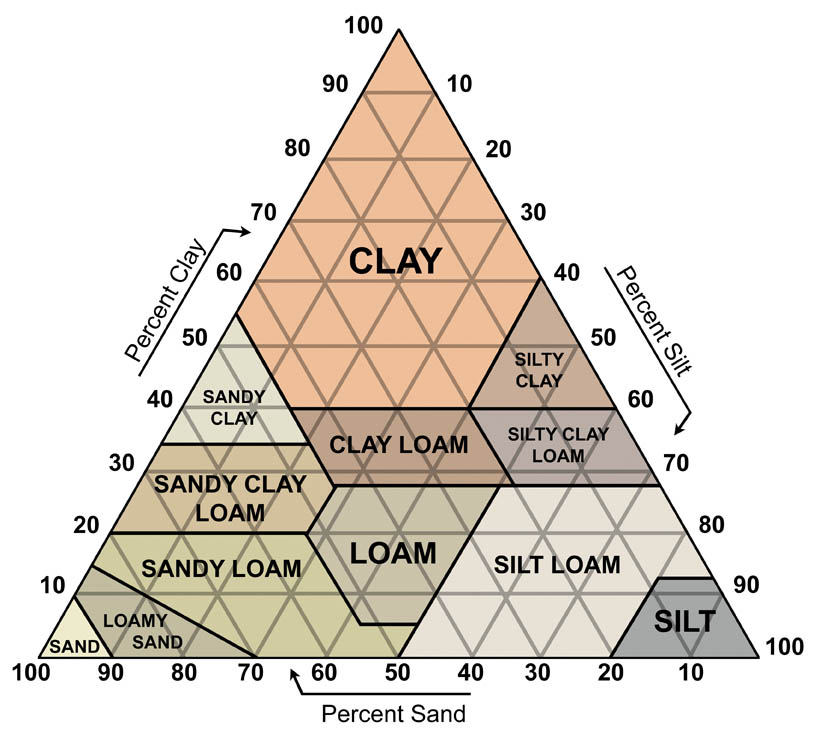
There are three main types of soil; Silty, Sandy and Clay. Loam is a mixture of these three types of soil and is nutrient rich and can drain well due to its macro-pores. This makes Loam soil the best for use and the growth of plants.
Want to test your soil? CLICK HERE to see how. Remember using the treadit gardening method, the weed and chemical free soil is far better.
What is a natural system of growth?

If there is a process missing from nature in your garden then it is not employing nature to it’s full capability meaning either you are trying to do natures work or that your garden may be struggling. The Treadit Gardening method is an in-between. Instead of growing in a forest which for most people is an impossibility, the aim is to copy natures setup in a garden bed. This also creates the advantage of directing the full growth of this garden into the plants you choose rather than a forest of trees.
Composting
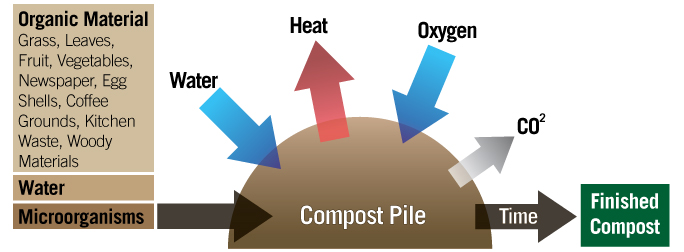
Composting is a method of using micro-organisms to speed up the process of decomposition in organic matter. Usually the method of composting is a pile in the garden that is turned every now and then in order for the pile in time to decompose. Another method is to sheet compost spreading the pile over a surface so that the pile can constantly have oxygen in order to decompose without the need for turning over the material.
So why not move your compost material onto the garden? If you dig the compost material into the ground then it can still decompose however it takes longer due to a lack of oxygen and therefore a lack of microbe activity. Then there is a risk of nutrients being used up in the process of longterm decomposition affecting the plant growth also potentially creating an acidic soil. In a cultivation method a sheet compost over the garden as a mulch works brilliantly until you have to deal with the sheet compost cover during cultivation. In a no-dig garden the compost material becomes more than a mulch but a long term accumulating layer.
The materials in the compost need to have a ration of between 25:1 and 30:1 of carbon to nitrogen. Grass clipping (without weed seed or chemical) or Woodchip is ideal for these ratios. Carbon increases microbial energy and Nitrogen increases the reproduction rate of microbes so there has to be a balance for a faster composting process.
Minerals
What is a mineral?
“A mineral is, broadly speaking, a solid chemical compound that occurs naturally in pure form. Minerals are most commonly associated with rocks due to the presence of minerals within rocks. The study of minerals is called mineralogy. A mineral can be made of single chemical element or more usually a compound.” (wikipedia)
Soil is made up of a large percentage of minerals and soil forms at something like a hundred years per inch.
How are minerals produced?
Minerals are sourced in various ways however a fundamental fact of biomineralology is that living orgasnisims produce minerals. We produce teeth and bones, plants produce cystolith inclusions in leaves and most importantly Micro-orgaisms are reponsible for a large amount of mineral inclusion in our food. Minerals produced by Microbes enter the soil, are absorbed via osmosys into plants then digested by us into our bodies which contribute to our growth!
“Just like vitamins, minerals help your body grow, develop, and stay healthy. The body uses minerals to perform many different functions — from building strong bones to transmitting nerve impulses. Some minerals are even used to make hormones or maintain a normal heartbeat.” (From kidshealth.org)
How do we gain minerals in our gardens?
There are three main mineral sources in the garden:
- External organic matter brings minerals into the garden from external growth platforms.
- Micro-orgaisms produce minerals
- Rocks act as a parent material slowly supplying minerals to the soil creating further soil mass. This process takes hundreds of years to create comparable results in soil mass.
Nutrients
What are nutrients and examples?
“Nutrients are compounds in foods essential to life and health, providing us with energy, the building blocks for repair and growth and substances necessary to regulate chemical processes. There are six major nutrients: Carbohydrates (CHO), Lipids (fats), Proteins, Vitamins, Minerals, Water.” (.gov website)
Where do nutrients come from in our gardnens?
“Nutrients get into the soil many different ways: from decomposed animal waste and dead plants, the atmosphere, weathering of rocks and bacteria conversions. When soils are used to grow foods, the soils need to be kept healthy, as a lot of nutrients are taken up by plants and not replaced.” (soils4teachers.org)
Where are nutrients stored?
“Nutrients are stored on organic matter and soil mineral particles by electrical charges. Like clay particles, organic matter is usually negatively charged and so can attract and loosely hold positively charged ions (cations).” (bettersoils.soilwater.com.au)
 Treadit Gardens